Wednesday, April 24, 2019

Headaches


Dear students,

Yesterday we read first and then discussed the article about headaches. In this post I would like to put some more information about headaches. Please, read, listen and watch. You are going to summarize everything you have learned and write about headaches in your journals. Good luck with it.

Irena


headache is pain anywhere in the region of the head or neck. It can be a symptom of a number of different conditions of the head and neck. Headaches can result from a wide range of causes both benign and more serious. Brain tissue itself is not sensitive to pain as it lacks pain receptors.

(This is a definition from Wikipedia, the free encyclopedia)


According to some articles on the Internet, there 5 types of headaches.


It's important to figure out what type of headache is causing your pain. If you know your headache type, you can treat it correctly.

In one 2004 study, 80% of people who had a recent history of self-described or doctor-diagnosed sinus headache, but no signs of sinus infection, actually met the criteria for migraine.

Here are some tips that will put a name to your pain.


Tension headaches
Tension headaches, the most common type, feel like a constant ache or pressure around the head, especially at the temples or back of the head and neck. Not as severe as migraines, they don't usually cause nausea or vomiting, and they rarely halt daily activities.

Over-the-counter treatments, such as aspirin, ibuprofen, or acetaminophen (Tylenol), are usually sufficient to treat them. Experts believe these may be caused by the contraction of neck and scalp muscles (including in response to stress), and possibly changes in brain chemicals.

Cluster headaches
Cluster headaches, which affect more men than women, are recurring headaches that occur in groups or cycles. They appear suddenly and are characterized by severe, debilitating pain on one side of the head, and are often accompanied by a watery eye and nasal congestion or a runny nose on the same side of the face.

During an attack, people often feel restless and unable to get comfortable; they are unlikely to lie down, as someone with a migraine might. The cause of cluster headaches 
is unknown, but there may be a genetic component. There is no cure, but medication can cut the frequency and duration.

Sinus headaches
When a sinus becomes inflamed, often due to an infection, it can cause pain. It usually comes with a fever and can be diagnosed by symptoms or the presence of pus viewed through a fiber-optic scope.

Headaches due to sinus infection can be treated with antibiotics, as well as antihistamines or decongestants. 

Rebound headaches
Overuse of painkillers for headaches can, ironically, lead to rebound headaches.

Culprits include over-the-counter medications like aspirin, acetaminophen (Tylenol), or ibuprofen (Motrin, Advil), as well as prescription drugs.

One theory is that too much medication can cause the brain to shift into an excited state, triggering more headaches. Another is that rebound headaches are a symptom of withdrawal as the level of medicine drops in the bloodstream.

Migraine headaches

Migraines can run in families and are diagnosed using certain criteria.

- At least five previous episodes of headaches
- Lasting between 4–72 hours
- At least two out of these four: one-sided pain, throbbing pain, moderate-to-severe pain, and pain that interferes with, is worsened by, or prohibits routine activity 
- At least one associated feature: nausea and/or vomiting, or, if those are not present, then sensitivity to light and sound

- A migraine may be foreshadowed by aura, such as visual distortions or hand numbness. (About 15% to 20% of people with migraines experience these.)


Here is a video about headaches. Watch it, please. Maybe you'll get some more information about headaches.


I understand it is a little boring to read about headaches, so to make you smile, I have found this video. Please, watch it. I hope you'll like them, and it will make you smile.


However, I'm not sure about this one. You might laugh or might feel sorry for this man. So, anyway, watch it.


So, next time when you have a headache, think if you want to go African style treating your headache.


Wednesday, February 7, 2018

What time is it?

Dear students,

We have learned how to tell time. Now you have to practice to make sure you understand and remember everything. Here is a post you have to read. There are some videos you have to watch. Please, do everything.

Irena


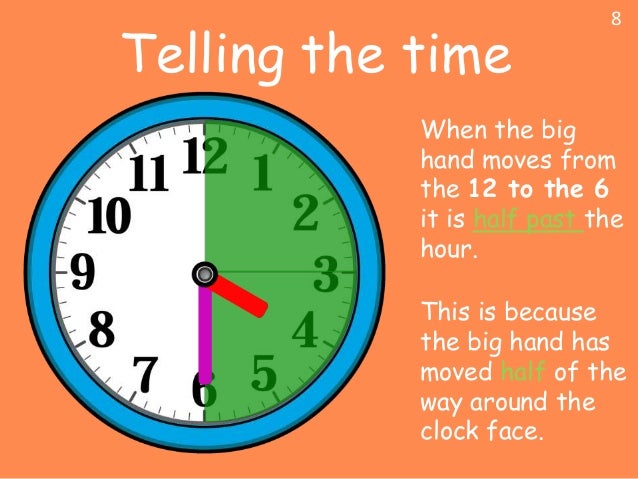
How do we tell time? First we have to learn how to ask the question about time. We usually ask: "What time is it?". Repeat this question many time until you remember the question. 

Now read about clocks, face, hand, hours and minutes.


Related image

First you have to remember how to tell time with no minutes, for example:

1:00
2:00
3:00
4:00
5:00
6:00
7:00
8:00
9:00
10:00
11:00
12:00


Now, please watch the video. Listen carefully and try to understand everything I've explained you. It's the same explanation. It's very easy - just watch, listen and repeat! 


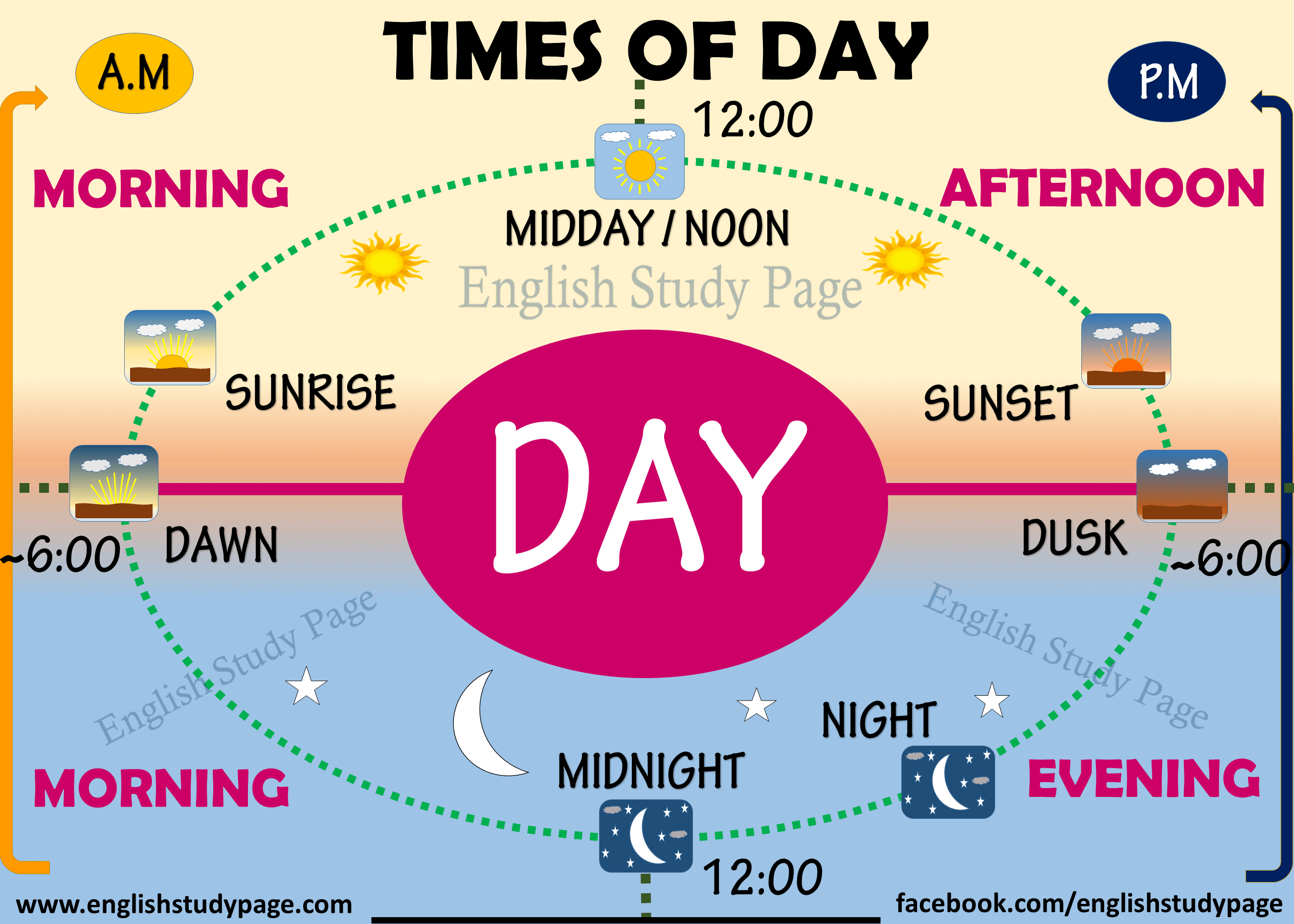
Please, remember that in English 12:00 am (midnight) is different from 12:00 pm (noon).

12:00 AM (ante meridiem) - before the midday, before noon (12:00) or before lunch time. It means morning time.

If we go to bed at 10:00 at night on Monday, so at 12:00AM we all sleep, we are in bed, but it's not Monday any more. It's early morning or late night on Tuesday


Then we sleep until morning. It's still Tuesday. Some hardworking people wake up early - at 6:00 or 7:00 in the morning or 6:00 AM or 7:00 AM. some lazy people sleep until 11:00 in the morning, which is 11:00 AM. One hour later it is 12:00 PM or noon. Hardworking people who wake up early in the morning, have lunch.

12:00 PM (post meridiem)- after the midday, after noon or after lunch time. It means afternoon time.


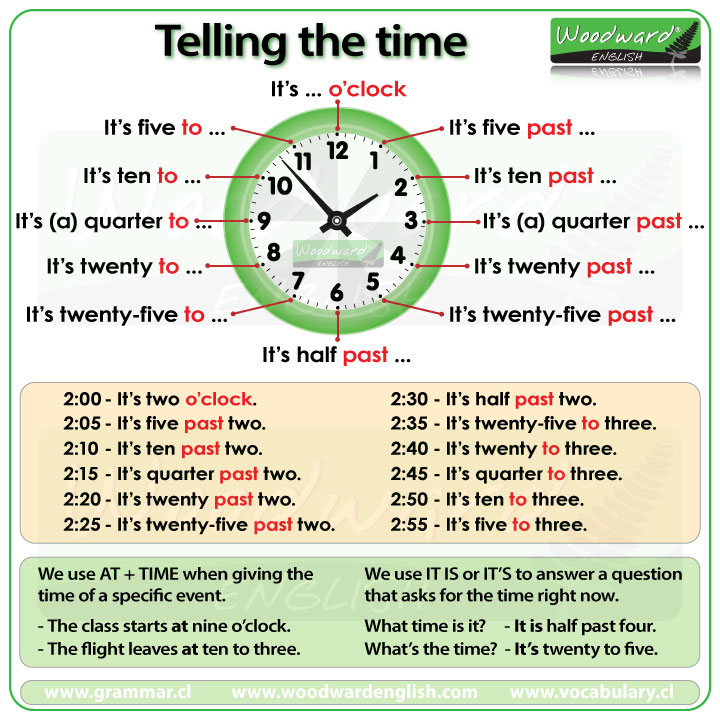
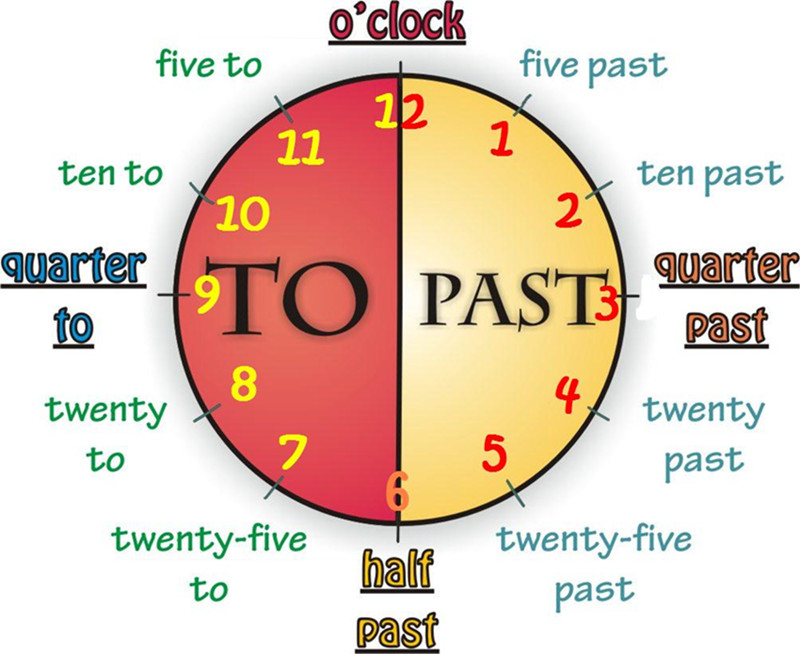
This is how we tell time. Look carefully and learn. Click here if you want to see the bigger picture.


Now watch this video. I will teach you how to tell time.


Watch this video. It's very useful.


So, can you tell time now?! I hope so. To make sure you know how, please, practice a little. 


Click on the links and do exercises.


Have fun!


Wednesday, January 31, 2018

Countries and Nationalities

Dear students,

We have learned Countries and Nationalities. Today you have to practice some more. Please, read this post and memorize all new words.


Irena


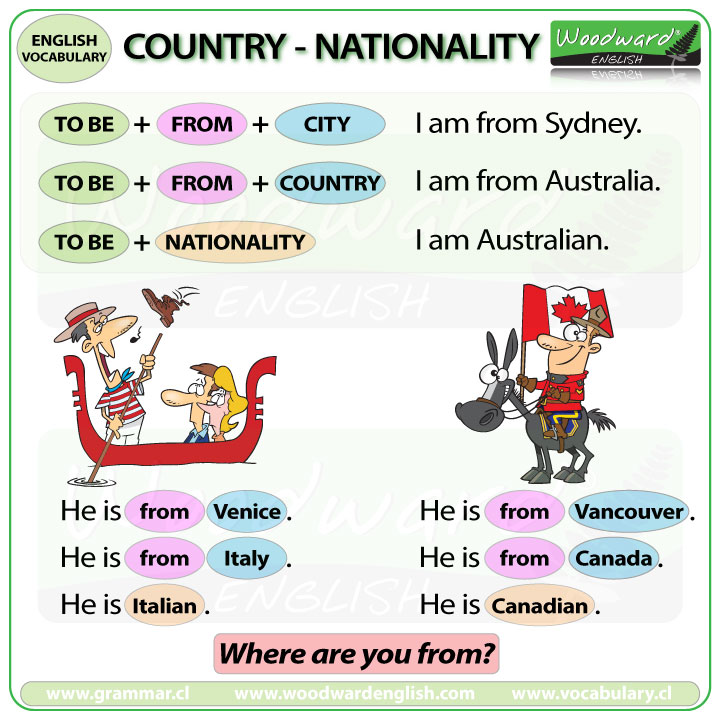
We almost never say: What is your nationality?

We usually say: Where are you from? 
OR 
Where do you come from?

To tell someone your nationality, we usually say: I'm Chilean


Singular (1)Plural (2, 3...)
CountryCountries
NationalityNationalities

CountryNationalityLanguage
AfghanistanAfghanPersian - Pashto
ArgentinaArgentine
Argentinian
Spanish
AustraliaAustralianEnglish
BelgiumBelgianFrench / Flemish
BoliviaBolivianSpanish
BrazilBrazilianPortuguese
CambodiaCambodianCambodian
CameroonCameroonianFrench / English
CanadaCanadianEnglish / French
ChileChileanSpanish
ChinaChineseChinese
Colombia *ColombianSpanish
Costa RicaCosta RicanSpanish
CubaCubanSpanish
DenmarkDanish (Dane)Danish
Dominican RepublicDominicanSpanish
EcuadorEcuadorianSpanish
EgyptEgyptianArabic
El SalvadorSalvadorianSpanish
EnglandEnglishEnglish
EstoniaEstonianEstonian
EthiopiaEthiopianAmharic
FinlandFinnishFinnish
FranceFrenchFrench
GermanyGermanGerman
GhanaGhanaianEnglish
GreeceGreekGreek
GuatemalaGuatemalanSpanish
HaitiHaitianFrench / Creole
HondurasHonduranSpanish
IndonesiaIndonesianIndonesian
IranIranianPersian
IrelandIrishIrish / English
IsraelIsraeliHebrew
ItalyItalianItalian
JapanJapaneseJapanese
JordanJordanianArabic
KenyaKenyanSwahili
LaosLaotianLaotian
LatviaLatvianLatvian
LebanonLebaneseArabic
LithuaniaLithuanianLithuanian
MalaysiaMalaysianMalay / Malaysian
MexicoMexicanSpanish
MoroccoMoroccanArabic / French
NetherlandsDutchDutch
New ZealandNew ZealanderEnglish / Maori
NicaraguaNicaraguanSpanish
NorwayNorwegianNorwegian
PanamaPanamanianSpanish
ParaguayParaguayanSpanish
PeruPeruvianSpanish
PhilippinesFilipinoTagalog / Filipino
PolandPolishPolish
PortugalPortuguesePortuguese
Puerto RicoPuerto RicanSpanish
RomaniaRomanianRomanian
RussiaRussianRussian
Saudi ArabiaSaudiArabic
ScotlandScottishEnglish
South KoreaKoreanKorean
SpainSpanishSpanish
SwedenSwedishSwedish
SwitzerlandSwissGerman, French, Italian, Romansh
TaiwanTaiwaneseChinese
TajikistanTajikTajik (Persian)
ThailandThaiThai
TurkeyTurkishTurkish
UkraineUkrainianUkrainian
(The) United KingdomBritishEnglish
(The) United StatesAmerican **English
UruguayUruguayanSpanish
VenezuelaVenezuelanSpanish
VietnamVietnameseVietnamese
WalesWelshWelsh / English


Learn the names of the Countries and Nationalities. Then, do the exercises.

Ex. 1
Ex. 2


Here is a video. Watch it and learn the names of the Countries and Nationalities:


Here are some more videos. Watch them.


Now, write about yourself: 

Where are you from?
What's your nationality?
What language do you speak?

Ask your classmate the same questions.


Monday, July 24, 2017

Feelings and Emotions (Beginning Level)

Dear students,

Let's talk about feelings and emotions. I collected some information for you here. Please, read, watch and do exercises.

Irena


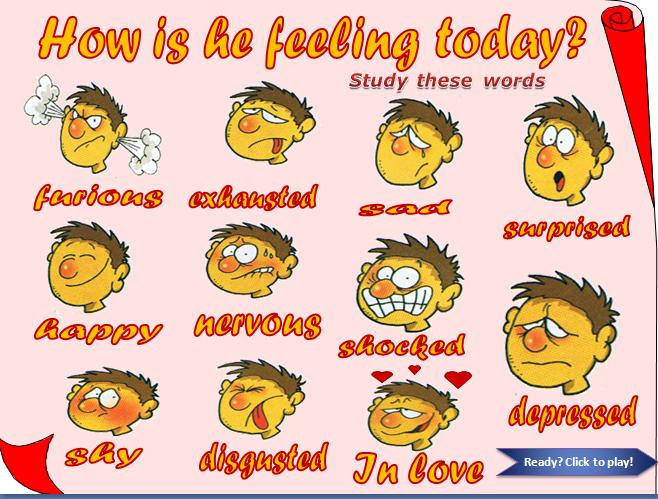
Names of Feelings

  • Happy 
  • Sad
  • Angry
  • Scared
  • Excited
  • Jealous
  • Sorry
  • Worried
  • Nervous
  • Calm
  • Surprised
  • Furious
  • Silly
  • Embarrassed
  • Ashamed
  • Guilty
  • Regretful
  • Loving
  • Pleased


Try to memorize these words. You might need them when you talk about your own feelings.


Talking and Asking About Feelings:


  • I feel / I am feeling… (I feel tired)
  • It seems like you are feeling… (It seems like you are feeling sad)
  • How do you feel about that? 
  • That makes me feel... (That makes me feel angry)
  • I'm just a little... (I'm a little hungry)
  • I am very... (I'm very happy)


After you learn feelings and emotions, please, do these exercises:

EXERCISE 1

EXERCISE 2


Now, practice some more here - EXERCISE


Here is a video with a funny song. Watch it and try to understand.


EXERCISE 1

EXERCISE 2


Here is one more video.


Please, practice.

Matching exercise 1


***
Please, practice with a partner!


How we ask about feelings:

To ask about feelings you can use the following questions:
  • How are you feeling today?
  • You look sad / upset. Are you OK?
  • You seem a little bit distracted. Are you alright?
  • You seem kind of low today. What's wrong?
  • You seem a little blue today. What's the matter?
  • What's wrong?
  • What's the matter?
  • Are you OK / alright?
  • Are you happy / angry...?
  • Is everything OK / alright...?

How we expressing feelings:


To respond to a question about feelings you can uss the following expressions.
  • I feel a little sad / happy / angry / ....
  • I am a little sad / happy / angry / ....
  • To be honest, I'm a little bit sad / happy / angry / ....
  • It's been a difficult day.
  • The thing is that, I am angry / sad / ...
  • I am mad at him / her..

Please, practice with a partner!
***


Now, listen to the listening exercises and repeat:


Here are more feelings and emotions:


1. Positive feelings

Positive Feelings
  • blissful
  • brave
  • careful
  • cautious
  • clever
  • concentrated
  • confident
  • curious
  • ecstatic
  • excited
  • fair
  • fantastic
  • friendly
  • glad
  • good
  • great
  • happy
  • honest
  • innocent
  • interested
  • joyful
  • mediative
  • nice
  • optimistic
  • pleasant
  • quiet
  • satisfied
  • sensible
  • serious
  • surprised
  • to be in love,lovestruck
  • to be pleased
  • to be proud of
  • wonderful

2. Negative feelings

Negative Feelings
  • aggressive
  • agonized
  • angry
  • annoyed
  • arrogant
  • awful
  • bad
  • bored
  • confused
  • crazy
  • disappointed
  • disbelieving
  • disgusted
  • enraged
  • exhausted
  • frightened
  • frustrated
  • grieving
  • guilty
  • hangover
  • helpless
  • horrified
  • hurt
  • hysterical
  • idiotic
  • indifferent
  • lonely
  • lovesick
  • mad
  • mischievous
  • miserable
  • nasty
  • nervous
  • puzzled
  • sad
  • sheepish
  • shocked
  • silly
  • smug
  • sorry
  • strange
  • stupid
  • suspicious
  • terrible
  • to be jealous of somebody
  • upset


Practice some more: CLICK HERE